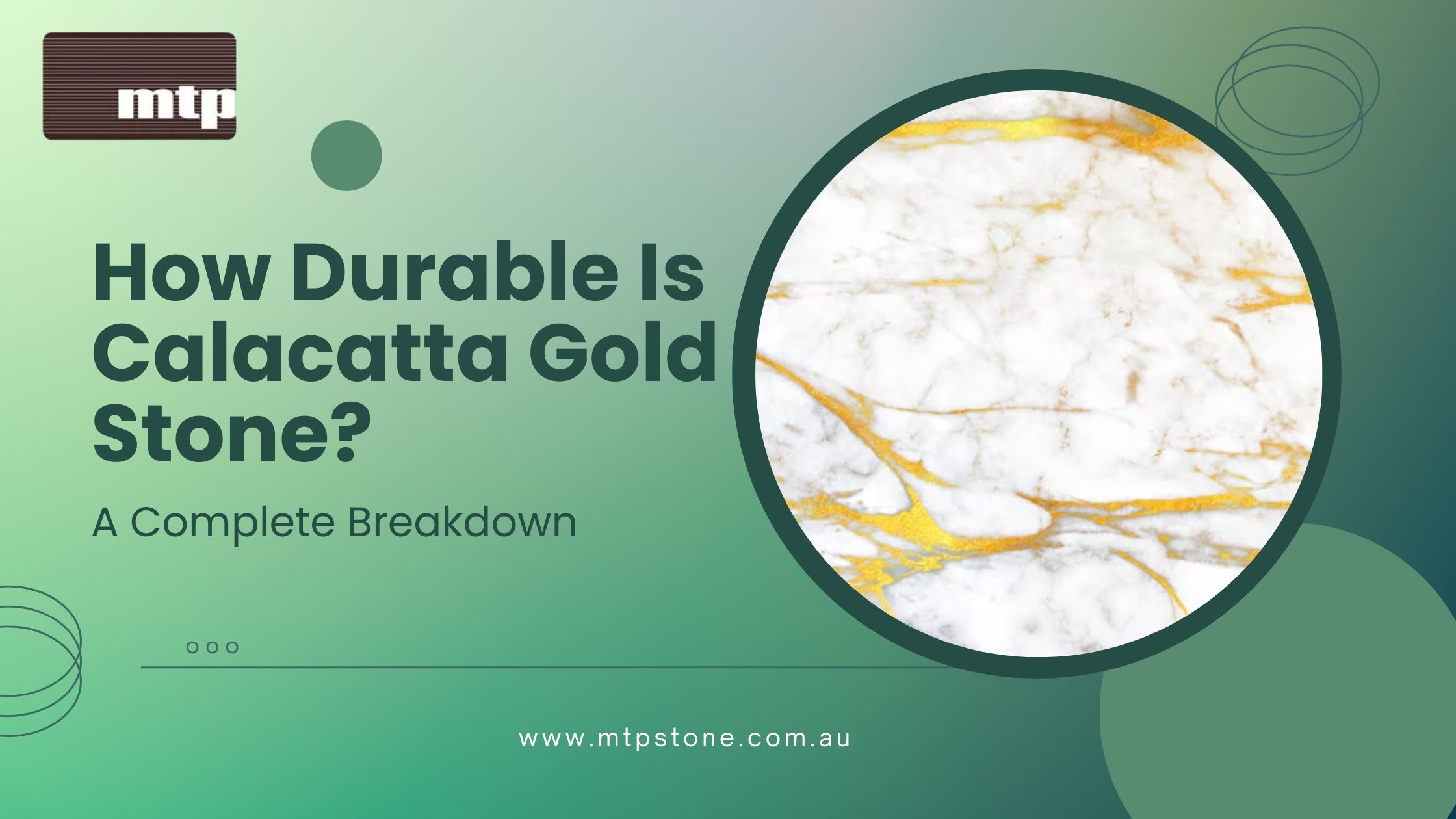
Calacatta Gold Marble is a high-quality stone whose grandiose looks, bold veining, and warm undertones make it quite the crowd favorite. Calacatta Gold Stone is very popular for many high-profile jobs, like upscale work surfaces, and flooring, and feature walls in luxurious kitchens and bathrooms.
But its beauty does not dictate the durability factor. Therefore, if you have any humid need to test this marble for use in your home or commercial setting, you need to have enough info on its durability, maintenance, and long life before making a choice.
In this blog of MTP Stone, we’ll guide you on everything about Calacatta Gold Stone that could help you assess whether it is the right type for you. Let’s dive into this!
Understanding Calacatta Gold Stone
Now, understand what a calacatta gold stone is and why it is so unique from other stones.
What Makes Calacatta Gold Unique?
- Calacatta Gold Stone comes from the same mountainous area in Italy as Carrara marble, which is the most renowned source of marble. Although Calacatta Gold is considered rarer and more popular because of this possibility, going back to identifying in-house models of importing Calacatta Gold, this would come back stronger with the stated featured appearance of prominent veining and warm golden tones.
- Carrara marble has some soft, subtle veining, but Calacatta Gold boasts bold and distinctly dramatic patterns that are nothing less than striking inside a room.
Composition & Properties
- The Calacatta Gold composition is mainly metamorphic rock, with calcite smooth and elegant. As a porous substance, all marble is prone to soaking up liquids if not sealed.
- The natural allure of marble means it possesses exceptional durability; though, you do have to mind taking care of it regularly to keep appearances rather brand-new-like.
Evaluating the Durability of Calacatta Gold Stone
Resistance to Scratches:-
- Calacatta Gold, like all the other forms of marble, can be less durable than granite and quartzite and can easily be scratched. The typical use would hardly cause any visible harm, but as mentioned, a sharp object like a knife can leave a scratch mark on its texture. Therefore, always use cutting boards in the kitchen and avoid dragging heavy things across their surfaces.
Heat Resistance:-
- Calacatta Gold Stone is an attractive natural product that resists quite a bit of heat, but it is not meant for high-temperature cooking. Heat is extensive; it can discolor the surface and possibly damage it. Use trivets or heat pads to avoid serious damage.
Stain Resistance and Porosity:-
- Calacatta Gold is translucent. It thus absorbs liquid and becomes easily stained if not duly preserved. The surface can be etched by spilling certain liquids, mainly acidic, such as wine, lemon juice, and coffee. Sealing must be performed regularly to protect against staining and moisture.
Water Resistance:-
- Calacatta Gold is in itself resistant to moisture, but tends to absorb it over time if not sealed. This makes sealing all the more important, especially in cases where heat and humidity can be a concern, for instance, bathrooms and kitchens. When sealed, the risk of damage from excess water is great.
Impact Resistance:-
- Although calacatta gold stone is a strong material, it is not immune to damage from impact. Heavy objects dropped on its surface can create chips or cracks. Take care to be aware of heavy appliances and ensure correct installation to avoid unintentionally causing damage.
Maintaining Calacatta Gold Stone for Longevity
To enhance the durability and lifespan of calacatta gold stone, proper maintenance is crucial. Here are some essential tips to keep it looking pristine:
Sealing the Surface:-
- Calacatta Gold may be protected against moisture and stains by sealing it at least once or twice a year. Resealing is necessary if you observe that water is no longer beading on the surface.
Daily Cleaning Routine:-
- Marble surfaces can be cleaned with a pH-neutral solution and a soft cloth or sponge soaked in warm water. Keep in mind that abrasive or acidic cleaners might degrade the finish and cause etching.
Handling Spills Immediately:-
- Wipe up spills as soon as they occur to prevent stains. Use a soft cloth to blot (not rub) the spill, especially if it involves acidic liquids like citrus juice or vinegar.
Using Protective Measures:-
- In the Kitchen: Always use cutting boards when preparing food and coasters for drinks.
- In the Bathroom: Use trays for toiletries to prevent product spills and stains.
- On Floors: Use rugs or mats in high-traffic areas to minimize wear and tear.
Polishing and Restoration:-
- Over time, marble may exhibit minor scratches or become dull in certain areas. To restore its initial shine, professional polishing services are available. For deeper stains or damage that cannot be easily remedied at home, consulting with a marble restoration specialist is advisable.
Comparing Calacatta Gold to Other Natural Stones
What is the Difference Between Calacatta Gold vs. Carrara Marble?
- Look: Carrara marble has softer, more subdued veining, whereas calacatta gold stone has bold, dramatic veining.
- Durability: Calacatta Gold is more expensive and rarer, yet both have comparable hardness.
- Maintenance: To avoid stains and etching, both need to be sealed and cared for regularly.
What is the Difference Between Calacatta Gold vs. Quartzite?
- Appearance: Despite having a more crystalline aspect, quartzite can resemble marble in appearance.
- Durability: Quartzite resists stains and scratches better and is tougher.
- Maintenance: Compared to Calacatta Gold, quartzite takes less care.
What is the Difference Between Calacatta Gold vs. Granite?
- Look: Calacatta Gold has exquisite veining, whereas granite has a speckled, gritty look.
- Durability: Granite resists stains and scratches better.
- Maintenance: Compared to marble, granite needs to be sealed less frequently.
Is Calacatta Gold Stone Worth It?
While calacatta gold stone demands more upkeep than various other materials, it continues to be among the most sought-after choices for both residential and commercial environments. Its opulent appearance, distinctive veining patterns, and timeless elegance truly justify the investment. If properly maintained, this stone can endure for many years while preserving its classic beauty.
Also Read:- Engineered Stone or Sandstone Benchtop? Key Factors to Consider Before Buying
Conclusion
Beyond being merely an attractive enhancement to your living space, calacatta gold stone represents a mark of luxury and sophistication. Although it necessitates attentive care, its unmatched elegance positions it as a wise investment.
With appropriate maintenance practices, such as sealing, homeowners can relish their lasting allure for many seasons. You can buy this beautiful stone from MTP Stone and transform your home today!
FAQs
Q: Can countertops made of calacatta gold stone be used in kitchens?
Ans:- Yes, however, to avoid stains and scratches, it needs to be sealed and maintained frequently. Trivets and cutting boards can be used to help shield the surface.
Q:- How frequently should Calacatta Gold Stone be sealed?
Ans:- Depending on usage and moisture exposure, at least once or twice a year. It could be necessary to seal high-traffic areas more often.
Q:- Is Calacatta gold prone to scratches?
Ans:- Although it can withstand a few scratches, damage can be caused by sharp objects and strong impacts. Chips and scraps can be avoided by taking precautions.
Q:- Can hot objects be placed directly on top of Calacatta stone?
Ans:- Despite being heat-resistant, discoloration may result from extended exposure to intense heat. Heat pads or trivets are the best options.
Q:- Is the cost of calacatta gold higher than that of other marbles?
Ans:- Yes, because of its rarity and distinctive veining, Calacatta Gold is among the priciest marble possibilities.