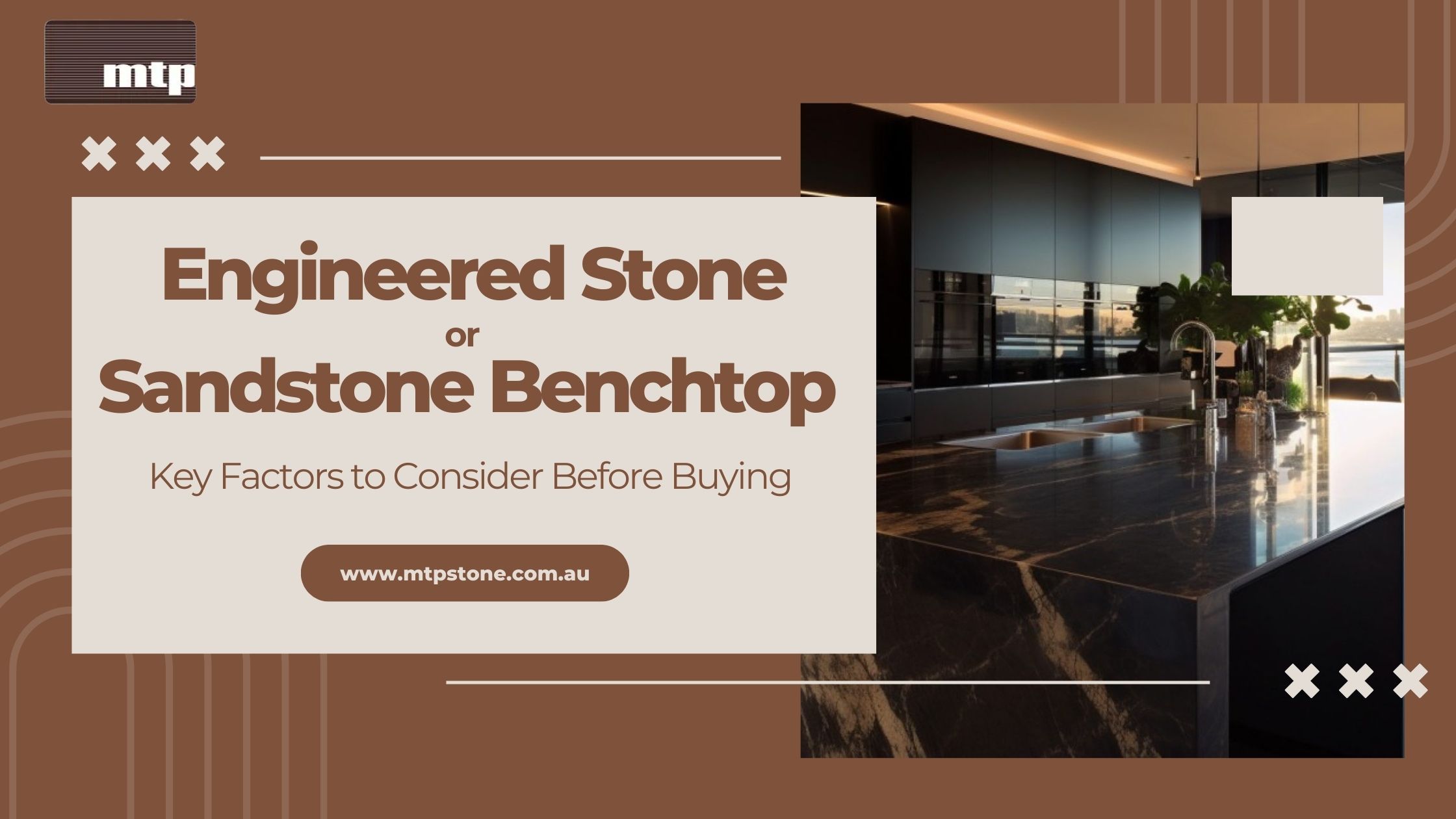
Let’s face it, selecting a benchtop involves more than just selecting a surface. It’s about investing in something that will look fantastic and endure for many years. You’re not alone if you can’t decide between sandstone and engineered stone.
Many individuals struggle to choose which option is best for their house. You want something useful, fashionable, and long-lasting, don’t you? However, you also don’t want to later come to regret your choice.
For this reason, we’re simplifying the process so that you can make an informed decision without the typical sales pitch or technical terms. You’ll know which benchtop is ideal for your area after this.
What Are Engineered Stone Benchstones?
In basic terms, Engineered Stone is the result of combining beauty and technology. To create a surface that is sturdy, non-porous, and incredibly fashionable, crushed stone—mostly quartz—is combined with colors and resins.
This may be your winner if you want the sleek, contemporary style without having to deal with a lot of upkeep.
Why People Love Engineered Stone:
- Unlike most natural stones, they are as heat-resistant, stain-resistant, and scratch-resistant as nails.
- No strange stains—it won’t absorb spills because the fabric isn’t permeable.
- It always looks fantastic with no erratic veining or sporadic color changes.
- No sealing or additional treatments are required; little work, a huge payoff.
There are countless options, with a wide variety of colors and patterns to suit any style.
What Are Sandstone Benchstones?
On the other hand, Sandstone Benchtops are all about that organic, rustic beauty. It is a naturally occurring substance that has been sliced and polished to provide a cozy, welcoming surface. Sandstone could be calling your name if you enjoy distinctive and organic textures.
Why People Love Sandstone:
- It looks distinctive since no two slabs are the same, adding a special touch to your room.
- Eco-friendly option: it has a lower carbon impact because it is natural.
- It is perfect for patios and outdoor kitchens since it mixes in so well with the natural surroundings.
- Sandstone’s organic texture gives it a homey, rustic charm and a warm, welcoming vibe.
- Longevity in appearance: it matures gracefully and gains personality with time.
Durability & Strength: Which One Lasts Longer?
If durability is your top concern (because who wants to replace a benchtop every few years?), this section is for you.
- Engineered Stone: It’s resilient. Even in a busy kitchen, it won’t break, chip, or wear out easily. Additionally, it can withstand regular use and severe impacts with ease.
- Sandstone: Although it is a natural stone that is porous, it may eventually absorb stains and moisture despite its strength. It might be difficult to maintain if not properly sealed.
Engineered stone is the obvious choice if you want maximum longevity with the least amount of upkeep.
Maintenance & Cleaning: Which One is Easier to Manage?
Nobody likes a benchtop that requires a lot of upkeep, let’s admit it.
- Engineered Stone: Simple and simple to clean. It only requires a quick clean with a moist cloth and a light detergent. No hassle, no sealing.
- Sandstone: Requires frequent sealing to guard against moisture damage and discoloration. Furthermore, you must clean up accidents quickly since they can create persistent stains, especially when wine or coffee is involved.
This one goes to Engineered Stone. This is your best option if you want a benchtop that is stress-free and requires no upkeep.
Cost Factor: Which One Gives Better Value for Money?
Let’s break it down because money matters.
- Engineered Stone: less expensive than high-end natural stones. It also has cheaper long-term expenditures since it requires less maintenance.
- Sandstone: Although the initial cost may be lower, ongoing sealing and maintenance might eventually mount up.
Winner?
In the long run, Engineered Stone provides superior value if you’re seeking the best deal.
Consider Visiting MTP Stone For Quality Sandstone
If you are looking for a reliable marble provider then we MTP Stone can be your best partner. We offer various landscaping products that will make your projects go from drab to fab.
Browse our website and take a look at what fits your requirements and needs.
From granite benchtops to edge profiles, we have got everything. So, what are you waiting for then? Order your marble now and enhance your space to the next level.
Also Read:- Calacatta Gold Marble: Benefits, Uses & Design Ideas for Homes
Conclusion
So, here we are. We hope this blog has covered all the aspects and doubts regarding engineered stone or sandstone benchstone. Also, choosing the best choice for you depends on what matters the most.
If you prefer durability, style, and low maintenance, engineered stone is best for you. If you love the natural texture and unique patterns and don’t want to spend too much time maintaining their beauty, the sandstone benchtop is made for you.
Moreover, don’t forget that besides all the factors, from whom you are purchasing also matters for a quality product. That’s where we, MTP Stone come to the play. We focus on understanding the needs and requirements of your landscaping project, just to make sure that you won’t regret your choice down the line.
FAQ’s
Q:- Can Engineered Stone handle the heat?
Ans: Yes, but it’s best to use trivets or heat pads to avoid potential discoloration.
Q:- How often does Sandstone need sealing?
Ans: Every 6–12 months, depending on use and exposure to spills.
Q:- Is sandstone cheaper than Engineered Stone?
Ans: Initially, it can be, but long-term maintenance costs may make it more expensive.
Q:- Which benchtop is best for outdoor kitchens?
Ans: Sandstone works well outdoors, but it needs sealing. Engineered Stone isn’t ideal for outdoor use as UV exposure can affect its color.
Q:- Can I fix chips or cracks in either material?
Ans: Yes, but Engineered Stone is generally more resistant to damage, so repairs are less likely.